


One mission, two spacecraft roles: the UAE asteroid probe explained
2 min read
Two names help make sense of the Emirates Mission to the Asteroid Belt: MBR Explorer is the spacecraft carrying the mission across space; the TII-built probe is its deployable payload. TII’s 6 October update provides new detail about how the smaller system is designed to work.
MBR Explorer is scheduled to launch from Japan in March 2028. After an approximately eight-year journey, the plan calls for the probe to deploy near asteroid 269 Justitia in early 2036. These are planned mission milestones, not completed events.
The probe’s onboard processing unit manages image capture, selection and power. TII says it will operate autonomously, with wide-field and narrow-field cameras providing different views. The small system has to decide which images to keep: deep-space photography comes with a rather demanding editing brief.
For readers following the mission, keep three stages separate in the diary: launch, arrival and probe deployment. A launch date tells you when the journey starts; it does not tell you when surface observations will arrive. Likewise, an image of the probe on Earth documents a development milestone, not an asteroid landing.
This distinction also helps when reading future updates. Check which vehicle a claim refers to, whether a date is a target, and whether a result has actually been observed. We are describing the published mission plan here, without claiming that every remaining test or integration step is complete.
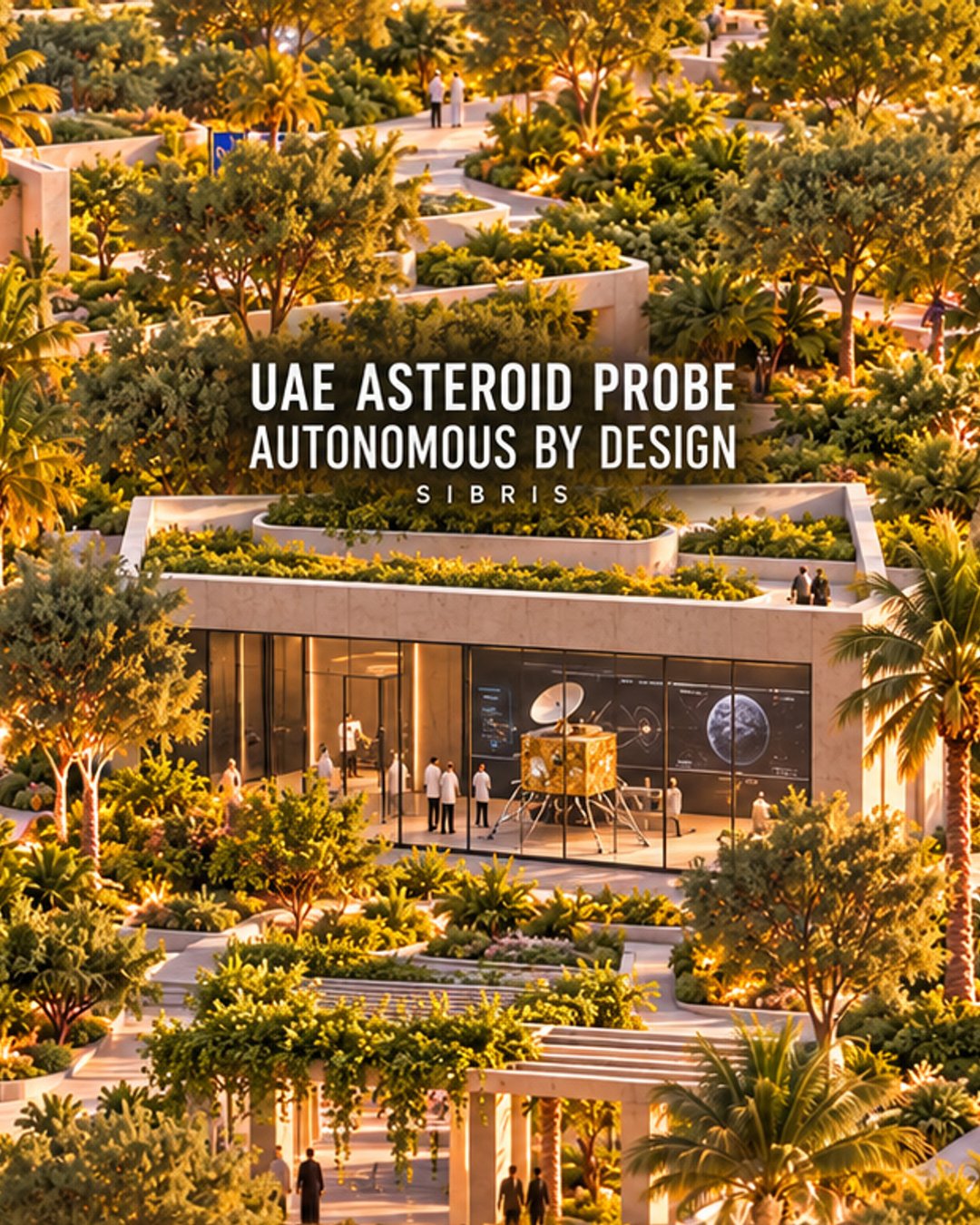
Cover: an original AI-generated conceptual space-engineering pavilion. It is not a photograph of TII’s laboratory, a technical depiction of the actual probe or a promised SIBRIS facility.
Sources & further reading
 Illustration
UAE food caps: read the category, the units and the phase
MoHAP’s latest update covers selected packaged foods. A practical guide to reading the figures without confusing a serving with 100 grams or a final target with today’s limit.
2 min read
Read story Illustration
Samsung Innovation Campus 2026: check the fit before applying
Applications close on 16 October. Check eligibility, assessment steps and the 400-hour commitment before putting the online AI course in your calendar.
2 min read
Read story Illustration
Guggenheim Abu Dhabi: reading the architecture beyond the silhouette
DCT’s latest design explanation connects the museum’s forms with shade, airflow and its coastal setting. Three things to notice when planning a future visit.
2 min read
Read story