


Masdar’s Greece solar deal: three milestones to keep separate
3 min read
Masdar has signed an agreement to acquire and develop a solar photovoltaic project of more than 550 megawatts in Greece from Lightsource bp, according to Abu Dhabi Media Office’s 24 October report. The project is expected to operate by the end of 2026. The transaction still requires regulatory approval and customary closing conditions, with completion also expected by year-end.
Those two year-end expectations refer to different milestones. Closing concerns completion of the acquisition; operation concerns the electricity-generating project. When following the story, look for a later statement confirming each separately. The same target period does not make one milestone proof of the other.
There is a third milestone to watch: battery storage. Masdar says it plans to add storage to the project. The announcement does not give a battery size, duration or commissioning date. A useful follow-up question is what has moved from intention into a defined project, with specifications and a delivery timetable.
The report also describes a separate agreement between Masdar and Khazna Data Centers to advance green data-centre development in Greece and explore dedicated clean-power and storage solutions. Keep that workstream separate from the solar acquisition. The announcement does not establish that a particular data centre already receives all of its electricity from this project.
Read capacity and delivery as different kinds of information. The headline project size tells you about scale, but it does not give a record of electricity delivered to users. To assess progress later, look for the operator’s commissioning update and reported output, with a stated period. Avoid filling those gaps with an assumed annual production figure.
A simple reading sheet can help: one row for ownership, one for operation, one for storage and one for the data-centre collaboration. For each, record what was announced, what remains conditional and which future confirmation would change its status. This is an editorial method for keeping a complex announcement clear, not an official project timetable.
Watch the verbs in subsequent updates. “Signed”, “completed”, “commissioned” and “exploring” describe different stages. Keep the date and the object of each statement together: a completed transaction does not automatically mean a completed battery, and a new partnership does not by itself identify a working facility.
The practical takeaway is to follow the project through its next confirmed milestones. The current announcement supplies a specific solar agreement and further development plans; future disclosures will establish when the transaction closes, the project operates and the storage proposal takes shape. These distinctions help readers follow delivery without turning forecasts into completed results.
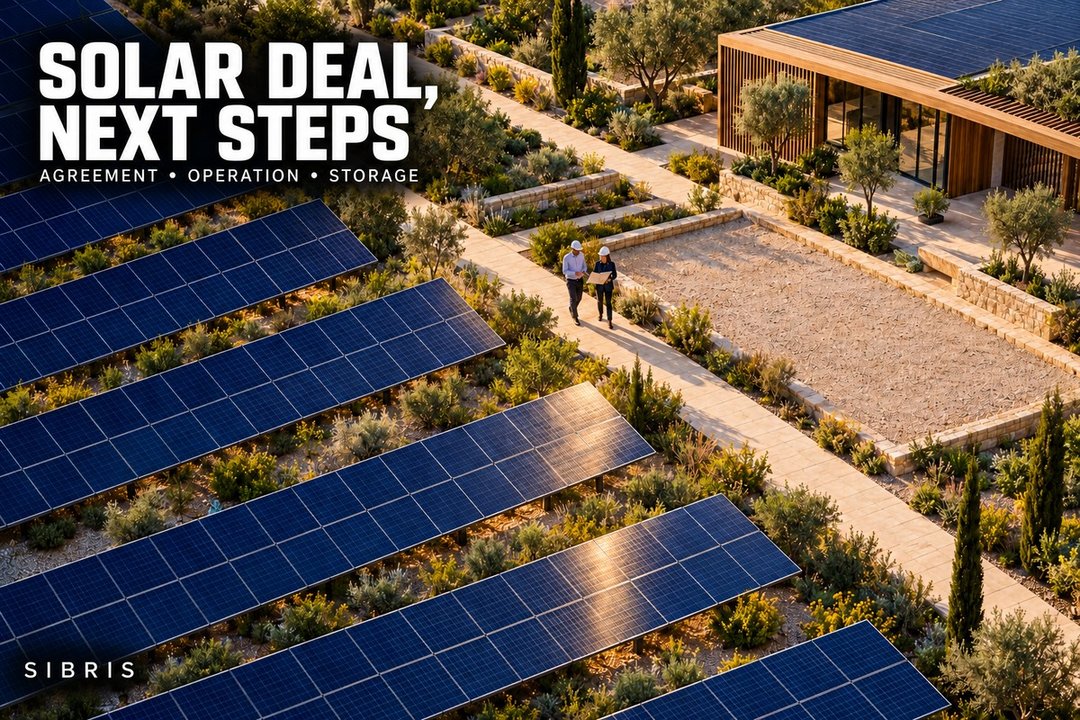
Cover: an original AI-generated conceptual illustration of solar panels and a separate planning area. It is not a photograph, engineering plan or exact depiction of the Greek project.
Sources & further reading
 Illustration
ADI–Tokinvest’s US$100m sukuk target: how to read the announcement
A memorandum, a target asset and a future development process are different milestones. Here is what the 6 October statement establishes.
2 min read
Read story Illustration
Cyber Run and Ride 2027: one date, several different plans
The announcement sets 31 January 2027 and several run and ride distances. Keep race-day details separate from the three-day village before planning a family visit.
2 min read
Read story Illustration
West Bani Yas: completion is one date, moving in is another
The latest ADHA announcement points to Q2 2027. A practical way to keep project completion, household arrangements and everyday services separate.
2 min read
Read story